


Hey, this is Julia, assistant editor at Counterstream.
I joined the team in August of last year. And since then, I’ve been thinking a lot about what movement building looks like under a second Trump administration.
An amalgamation of injustices has become our everyday reality: the genocide in Gaza is ongoing, the United States Environmental Protection Agency is being transformed to serve some corporate pipe dream (literally), and the President’s foot soldiers are shooting people dead in the street. As some would say, the “imperial boomerang” is clearer than ever.
But in this moment, there’s something we cannot allow to dissipate: an obvious rise in people power.
That’s why starting today, in each edition of The Stream, I’ll reflect on the movements that are taking shape across the U.S. and what they mean in the broader fight for climate and environmental justice.
This newsletter isn’t just about keeping you informed. It’s about analyzing the ways communities are building power in real time and what it takes to sustain that power.
So, what’s on my mind this week? An historic nationwide shutdown took place on January 30. Hundreds of thousands boycotted work, walked out of school, or withheld their dollars to send a clear yet uncompromising message: there will be no business as usual until the Trump administration ends its campaign of terror on immigrants.
A general strike, or what is close to it, hasn’t taken place in the U.S. since 2006’s “Day Without an Immigrant” when more than 1 million people took action to protest federal immigration policy.
Fast forward to now, and we’re seeing another momentous period where the general population is unafraid to come face to face with federal power.
This moment is crucial for environmental justice. What’s starting as a grassroots effort to end the violent policing and deportations of immigrants could transform into a broader message against the everyday exploitation of immigrant workers and the destabilization of regions like the Global South, two things that are just as much about environmental justice as they are about immigrant rights.
A system this large doesn’t go down without a fight. But there’s something we can learn from a previous Black-led labor movement that organized for environmental justice in 1968.
Almost 58 years ago, on Feb. 12, 1968, Black sanitation workers went on strike in Memphis, TN to protest unsafe and inhumane working conditions in what became known as the Memphis Sanitation Strike. It launched after Robert Walker and Echol Cole, two garbage collectors, were crushed by a truck that malfunctioned on the job.
What came next was a series of work stoppages and demonstrations that demanded union recognition, better pay, and safer working conditions. The demands weren’t easily handed over: the city’s mayor refused to recognize the union.
So workers continued striking, and when police tear gassed them in response, protests grew stronger. High school and college students, priests, and civil rights leaders, including Bayard Rustin and Martin Luther King Jr., joined actions, rallies, and marches with the workers.
An action that began with an estimated 1,300 workers eventually became a movement of more than 20,000. It grew so large, the mayor called in the National Guard in hopes to extinguish it, but the community continued to demonstrate. They protested again with signs that read, “I AM A MAN.”
The union eventually won its official recognition by the City Council with the promise of better pay. Workers had to continue pressuring the mayor to meet these promises, but the foundation of a broad-based, multiracial effort focused on the plight of African American workers was alive.
A very similar situation is unfolding now. Local pockets of resistance across towns and cities have joined into a nationwide movement that immigrants, citizens, and people of all backgrounds are partaking in.
So no matter what Trump tries next, remember the Memphis Sanitation Strike of 1968 and other historical actions like it.
They show what’s possible when masses of people come together to demand change — even when local and federal forces try everything to stop them.
Wishing you a Happy Black History Month.
The Latest at Counterstream
- Counterstream’s Impact Report is available now!
- A People’s Climate is nominated for the 2026 Impact Media Awards! Cast your vote here before February 13.
- Abre’ Conner, Counterstream advisor, Peace & Riot contributor, and director of the NAACP’s Center for Environmental and Climate Justice, was featured in TIME Magazine for her work helping communities defend their environmental rights.
Movement News
Hundreds in Georgia are pressuring legislators to regulate data centers
Georgia has the highest number of data centers of any state. Residents are pushing for their representatives to pass laws that could serve as some of the strictest regulations on data centers in the country. Read more
Seattle is giving $1 million to 12 community-led organizations to support those most impacted by climate change
Grants will be given to projects led by or serving communities that face disproportionate climate impacts, including Black, Indigenous, and other people of color, immigrants, refugees, low-income residents, youth, and elders. Read more
A community-run solar grid in Illinois will make living more sustainable — and more affordable
Northern Illinois energy bills have been skyrocketing. The Yeoman Solar Project is repurposing a Superfund site to bring lower-cost energy to the area. Read more
Worth Revisiting
Overpolicing harms our health — and the planet
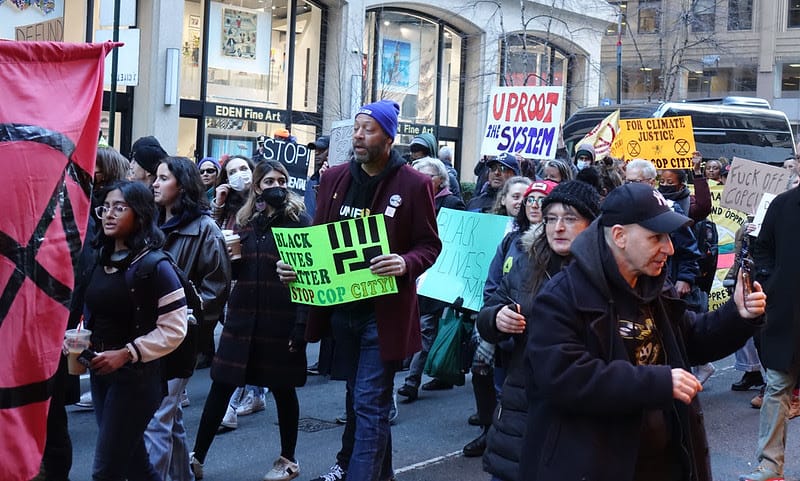
‘Cop City’ revealed how police are used to protect systems that torment Black communities and uproot the Earth. What can we learn from it?