


A consequential Supreme Court case will determine whether state and local governments can hold fossil fuel companies liable for climate change.
Eight Justices are currently deliberating arguments in what has been described as the biggest climate case this term, Suncor Energy, Inc. v. County Commissioners of Boulder County.
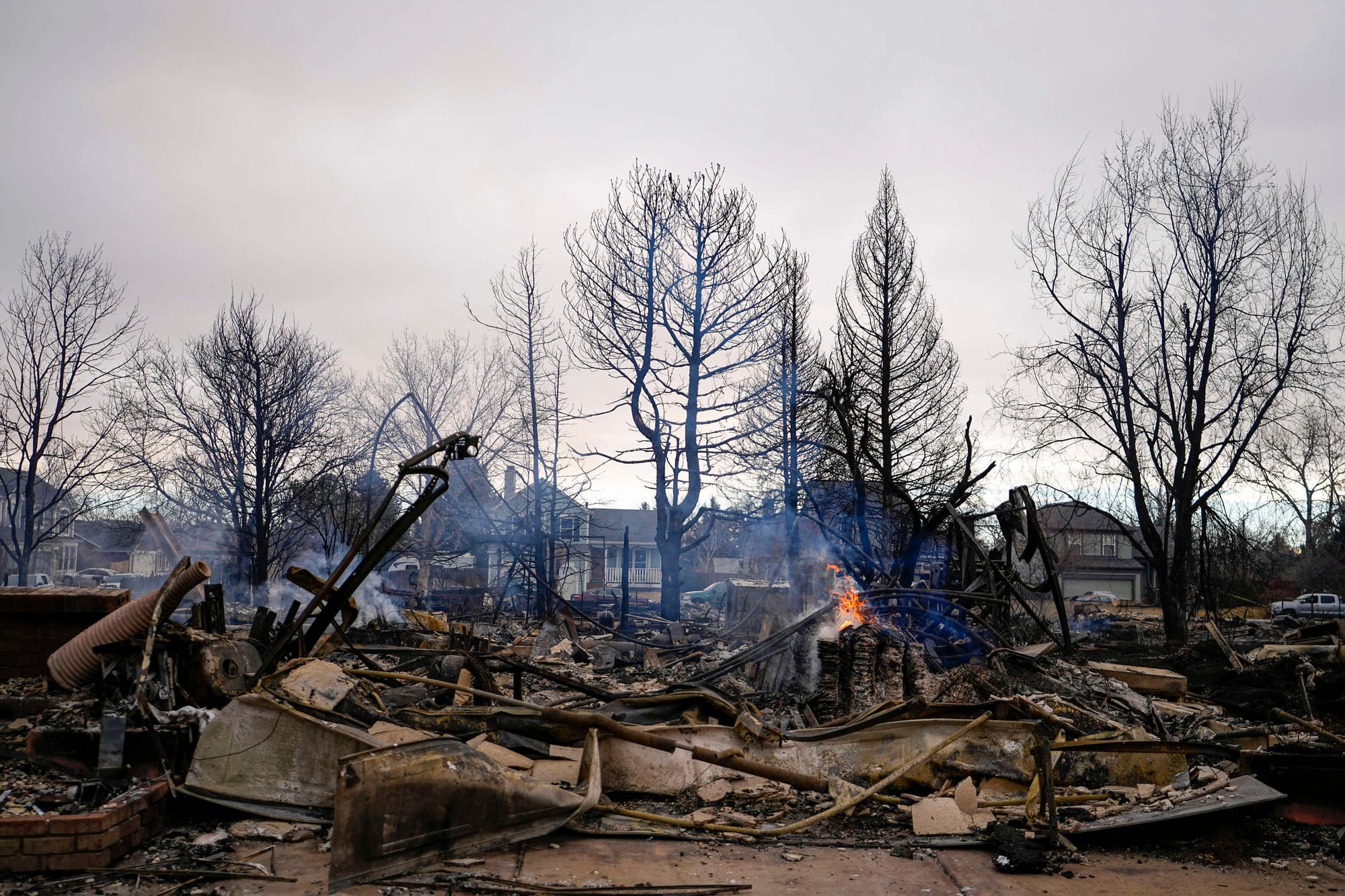
Boulder County sued Suncor and Exxon Mobil in 2018, arguing that the companies knowingly deceived the public about the harmful effects of fossil fuel pollution and should pay damages to Boulder. The lawsuit came after the Marshall Fire, the most devastating wildfire in Colorado’s history, ripped through the county in December 2021, killing two people and destroying 1,084 homes.
The lawsuit’s fate now sits at the federal level with the most pro-big business SCOTUS in history.
While the judges debate whether the lawsuit can proceed, Coloradans continue to advocate for their right to clean air. They want the lawsuit Boulder County filed to proceed in state court, on the grounds that local governments have the power — and responsibility — to protect their communities.
Maddison Schink is one of them. For her, the consequences of the fossil fuel industry aren’t a distant threat. A Suncor refinery pumps plumes of black smoke into the air near her home. The symptoms of her chronic illness are triggered by poor air quality.
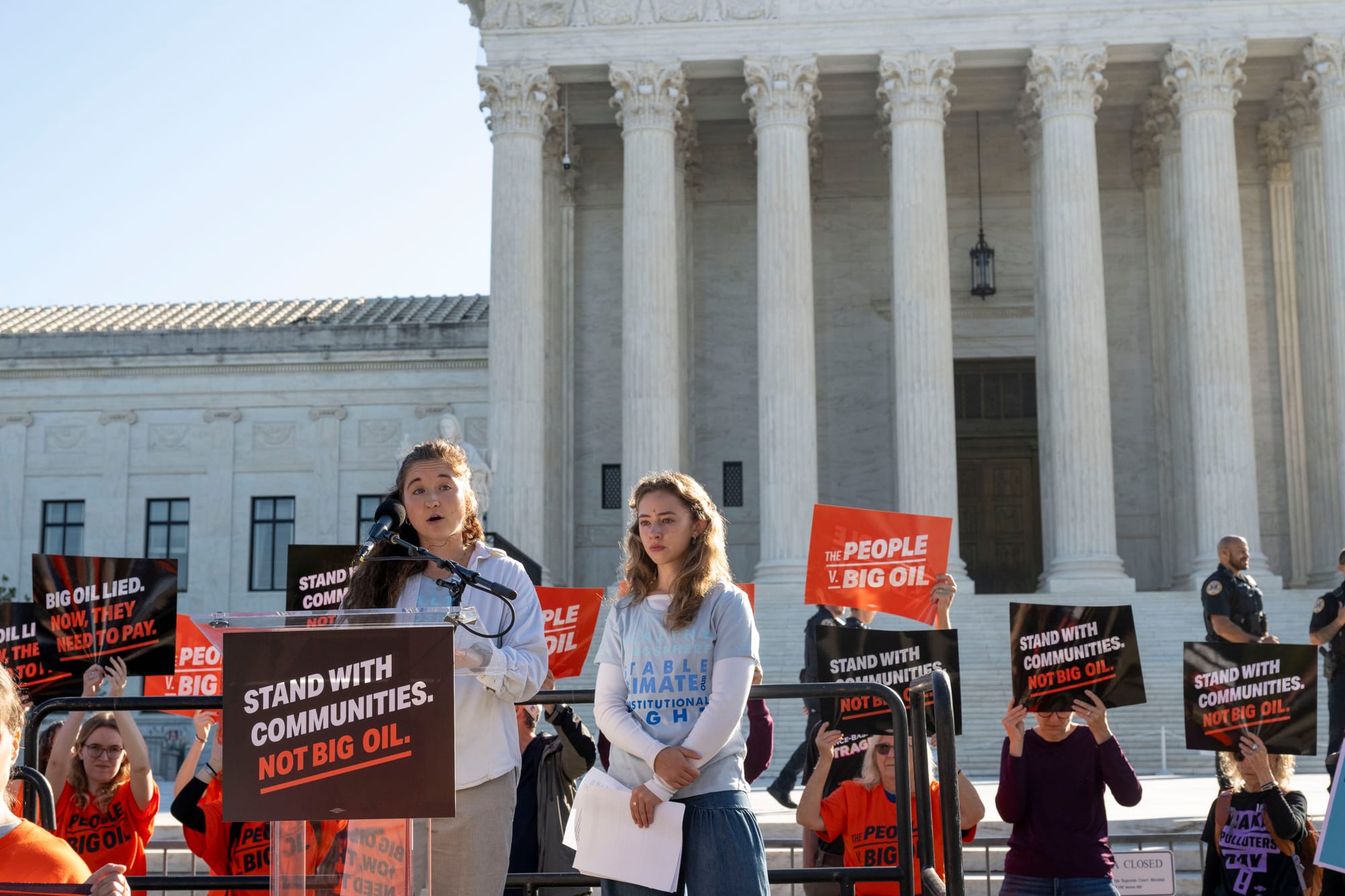
At 26-years-old, she is one of eight young people who decided to publicly address the highest court in the nation in an amicus brief filed in August by Our Children’s Trust, a nonprofit organization helping young people assert their climate rights in court.
“We [young people] are holding so much grief, anxiety, and uncertainty about our futures,” Schink told Counterstream. “It feels deeply unfair that youth are collectively paying the price for decisions we did not make.”
Across the country, young people like Schink feel that their entire futures hang in the balance from unchecked fossil fuel use. She spoke with Counterstream about the significance of the lawsuit, why climate change is personal, and why the Supreme Court should side with the people over Big Oil.
This interview has been edited for length and clarity.
When the 2021 Marshall Fire broke out, your grandmother was home and had to evacuate. What was that like?
I was stunned. I remember sitting at the kitchen table in disbelief, immediately concerned for my grandma and grandpa’s safety and wanting them to leave right away. I had lived with them for several years and it was where I called home, ate home-cooked meals, brought my friends for the holidays, and felt most secure.
My grandma’s voice was urgent but surprisingly calm when she asked me to picture my bedroom and name three things that were easy for her to grab and most sentimental. My panicked mind had a hard time picturing anything, but I managed to name three things that felt irreplaceable: my camera with photos, a backpack with patches from places I had visited, and a childhood blanket.
"She asked me to picture my bedroom and name three things that were easy for her to grab and most sentimental."
What did you do after you received the news?
For the rest of the day, I was glued to the news and weather reports, watching the fire spread, realizing how serious this was, and praying everyone in my community had gotten out safely and that snow would come or the winds would die down.
I couldn’t shake this image in my head of the wooded area behind our house, where I walked nearly every day to connect with nature, engulfed in flames. I was trying to come to terms with the fact that the places I knew and loved may never look the same. There was so much uncertainty, grief, anxiety, and even anger.
Did you connect the fire to climate change at the time?
I immediately connected what was happening to climate change, knowing full well that December in Colorado wasn’t [a] natural fire season and that severe drought was one of the factors that made this tragedy possible.
Amid the tangled relief and guilt of learning that our neighborhood had survived and we could return home the next day, I felt a profound clarity: I would dedicate my education, career, and life to addressing climate change because there is no other issue that feels so pressing as being able to live safe, healthy lives on the planet we all call home.
Why is the Supreme Court’s pending decision on Suncor Energy v. Boulder County so vital?
I used to think wildfires were only a threat on the outskirts of cities and in forested areas, but the Marshall Fire showed us that suburban areas are also vulnerable.
The Marshall Fire shattered my sense of safety. This case feels so significant because I know that so many communities like my own are — and will continue to be — at risk for climate-related disasters. And the Supreme Court should not take away our right to hold fossil fuels accountable for their decades of deceit that created this reality.
Why did you decide to join the amicus brief in support of this case?
We [youth] are holding so much grief, anxiety, and uncertainty about our futures. I have friends who can’t picture having kids because they don’t know if our climate will be stable. I worry about whether I can even live out my life in Colorado with such severe drought conditions. Summers are becoming increasingly miserable with the heat and wildfire smoke. But if I can’t live here, then where? Can you really run from climate change?
It feels deeply unfair that youth are collectively paying the price for decisions we did not make. Government leaders and fossil fuel companies knowingly jeopardized the systems that make our planet livable and failed to change course when the science was clear. I knew I had a story that wasn’t only my own but belonged to youth across Colorado and the nation, and I wanted to make sure the highest court heard us.
"But if I can’t live here, then where? Can you really run from climate change?"
Were you nervous about speaking out about your experience in such a consequential case?
I was definitely nervous because I knew that this case would receive a lot of media attention, and I have always been on the more introverted side. I’ve historically liked working behind the scenes of change rather than being the face of it.
What really motivated me to take this leap was thinking about my little brother (10-years-old) and sister (8-years-old), who are growing up in a Colorado that is already so different from the one that I experienced as a kid due to climate change. It’s the small things, like not experiencing the unexpected joy of snow days with our increasingly dry winters, and the bigger things, like missing school because of heat and damage to their still-developing lungs from wildfire smoke.
How pervasive is the fossil fuel industry in your daily life?
When I moved from Boulder County to Adams County about a year ago, I signed up for local air quality and news alerts and very quickly realized that the Suncor Refinery was constantly violating its permits. Even on days when there weren’t highly visible flames and black smoke, I became extremely anxious about the air quality in my community. So I monitored it, invested in air filters, and kept my windows closed to keep my space as safe as possible.
Due to chronic illness, I am sensitive to anything that triggers more inflammation in my body and could lead to a flare-up that causes me to have to step back from the things that are important to me. School, internships, time with friends and family, or being active outdoors running or walking in my neighborhood. This hyper-vigilance and uncertainty about whether your environment is healthy takes a mental toll. Big Oil, operating with permission from [the] government, has fundamentally altered how I experience everyday life.
If you could directly address the Supreme Court Justices deliberating this case, what would you say to them?
I would ask the Supreme Court Justices to think about the kind of world they want to leave for their children and grandchildren. I want them to understand that climate change is here and that its effects are deeply personal, not abstract, distant threats — it is quite literally at the doorstep of so many American children.
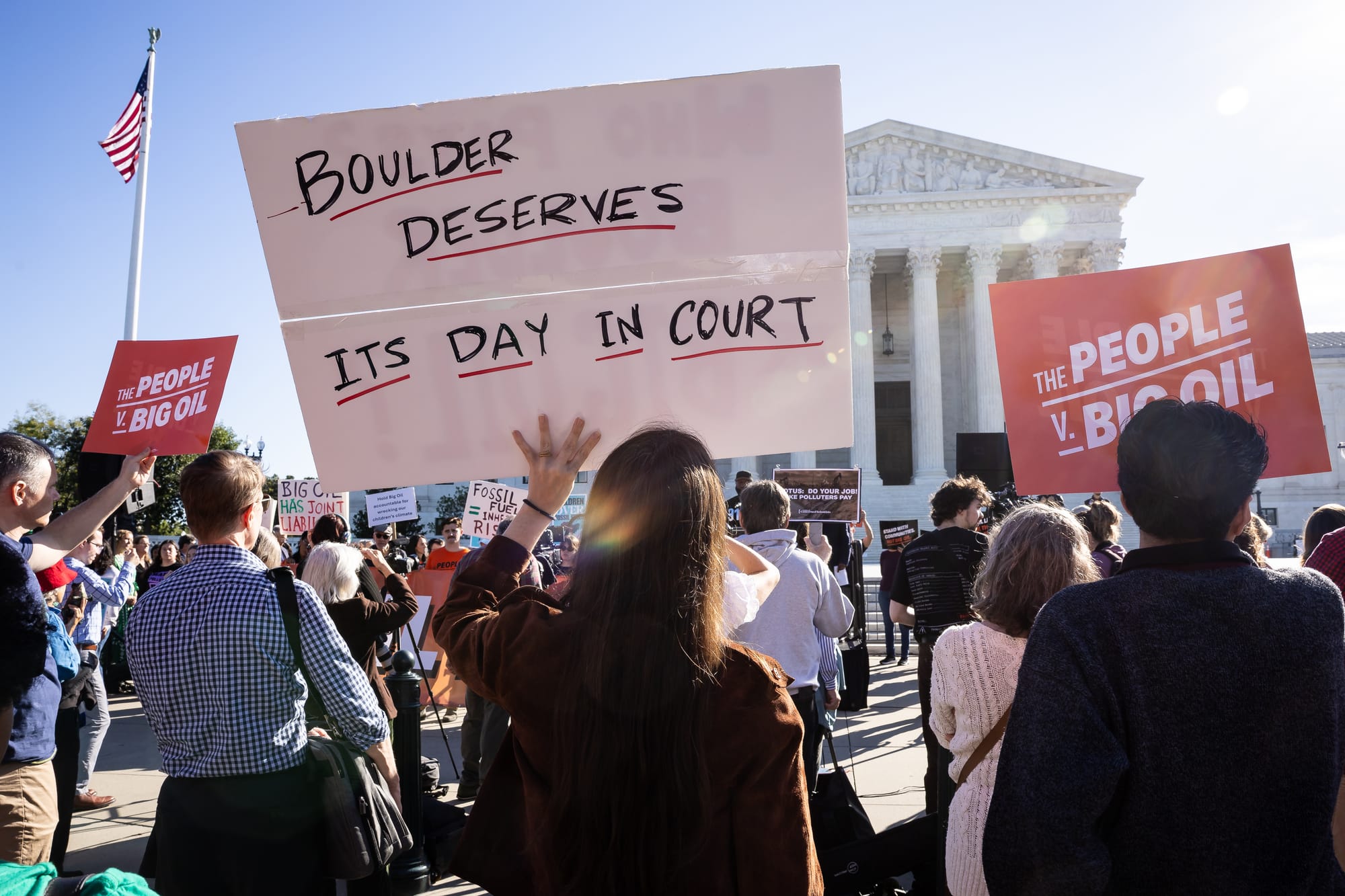
I want them to have the courage to stand on the side of the people, not powerful special interests like Big Oil. We want the case to proceed on the merits in Colorado state court because the people of Boulder deserve their day in court. Rather than cut this case short before trial, the Court should allow Boulder to pursue its claims and avoid setting a dangerous precedent that could restrict state and local governments’ ability to protect their citizens.
I want fossil-fuel regulations at the local, state, and federal levels that listen to science and prioritize the well-being of people and the planet over profit.
What is your message to other communities in the U.S. who live near refineries, landfills, data centers, and other major polluters, and are also fighting for the right to breathe clean air?
This case will undoubtedly have consequences for communities around the U.S. that are trying to restore access to their fundamental constitutional rights to life and liberty and to a stable climate.
None of us are alone in this pursuit of environmental justice, and there are many ways we can multiply our power, learn from one another, and amplify our voices to hold major polluters accountable. Boulder – and so many Coloradans – are in solidarity with them.
Want to learn more about the Suncor Energy case?
Elie Mystal breaks it down on A People's Climate:
Why SCOTUS is Climate Action’s Biggest Threat